
Creamy Classic Scalloped Potatoes Recipe
There is something undeniably comforting about a bubbling dish of scalloped potatoes coming out of the oven. It is the ultimate side dish that manages to be elegant enough for holiday dinners yet simple enough for a Sunday family meal.
For me, the perfect scalloped potato recipe is all about balance. You need tender potatoes that hold their shape and a sauce that is rich and velvety without being greasy. This recipe uses a classic béchamel technique to ensure every layer is perfectly coated. Let’s get cooking.
Why You Will Love This Recipe
- Velvety Texture: Unlike some recipes that break or become watery, the roux-based sauce ensures a smooth, creamy consistency throughout the baking process.
- Simple Ingredients: You likely have everything you need in your pantry already. It relies on basic staples to create a luxurious flavor.
- Even Cooking: By slicing the potatoes thinly and uniformly, we ensure that every bite is perfectly tender, avoiding those dreaded undercooked crunchy centers.
- Versatility: It pairs perfectly with almost any protein, from glazed ham and roast beef to simple grilled chicken.
Ingredients List
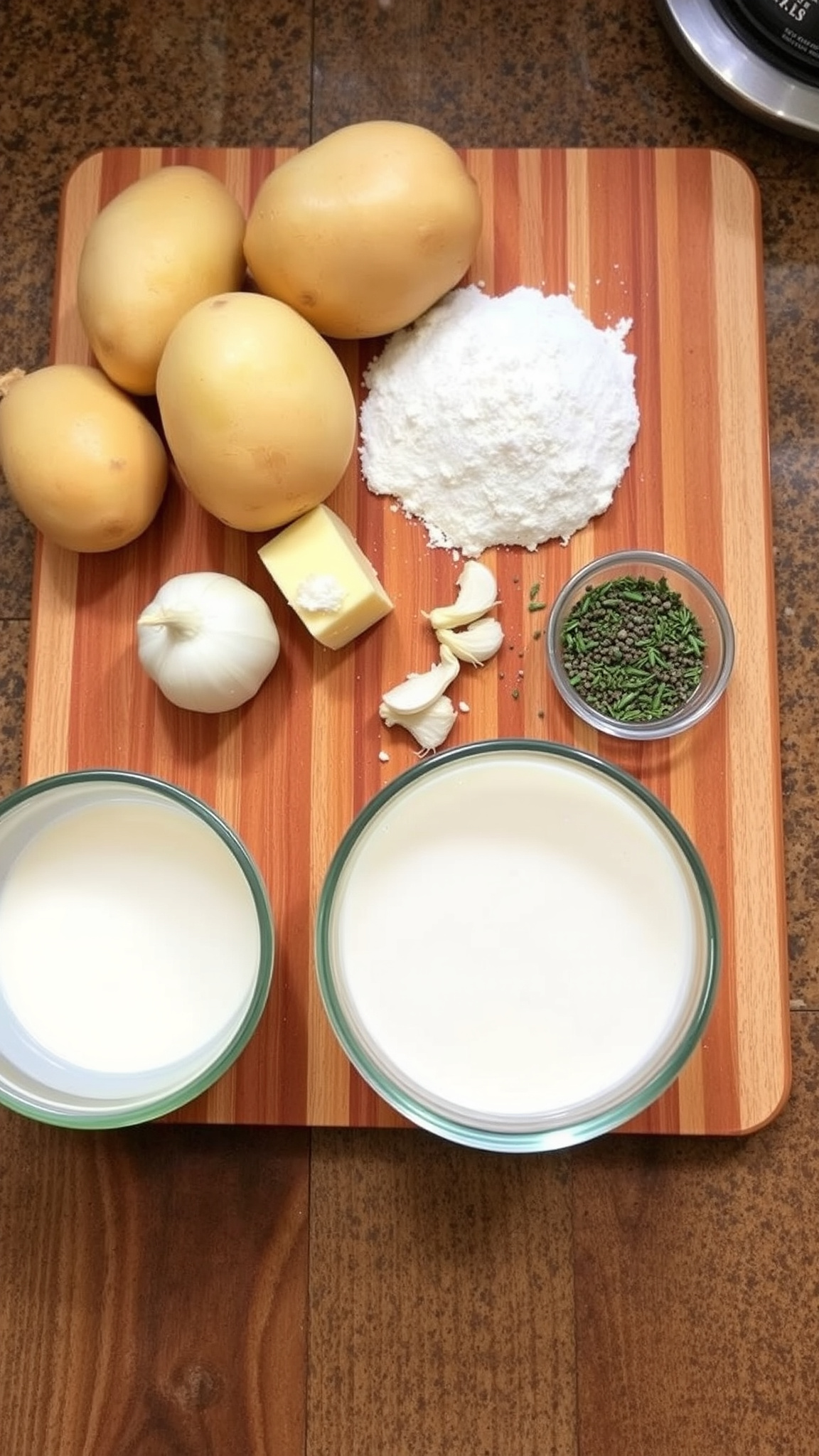
To get that classic creamy flavor, quality ingredients matter. Here is exactly what you will need:
- 4 lbs Potatoes: Yukon Gold are best for a buttery texture that holds its shape, though Russets work if you prefer a fluffier result.
- 4 tbsp Unsalted Butter: Used to make the roux and sauté the aromatics.
- 4 tbsp All-Purpose Flour: This thickens the sauce to coat the potatoes.
- 3 cups Whole Milk: You can substitute half of this with heavy cream for an even richer dish.
- 1 small Yellow Onion: Finely minced.
- 2 cloves Garlic: Minced.
- 1 tsp Salt: Plus more to taste.
- ½ tsp Black Pepper: Freshly cracked is best.
- ½ tsp Dried Thyme: Or fresh thyme if available.
- 1 cup Sharp Cheddar Cheese (Optional): While traditional scalloped potatoes are just cream, a little cheese adds a nice crust.
- Fresh Parsley: For garnish.
Step-by-Step Instructions
Follow these steps to ensure your potatoes come out tender and the sauce stays creamy.
1. Prep the Potatoes
Preheat your oven to 400°F (200°C). Grease a 9×13 inch baking dish with butter. Wash, peel, and slice your potatoes into 1/8-inch thick rounds. A mandoline slicer is highly recommended here to keep them uniform, which ensures even cooking.
2. Sauté Aromatics
In a medium saucepan over medium heat, melt the butter. Add the minced onion and cook for 3-4 minutes until soft and translucent. Add the garlic and cook for another 30 seconds until fragrant.
3. Make the Cream Sauce (Roux)
Sprinkle the flour over the onions and butter. Whisk constantly for about 1-2 minutes to cook out the raw flour taste. Gradually pour in the milk while whisking vigorously to prevent lumps. Continue cooking until the sauce thickens enough to coat the back of a spoon. Stir in the salt, pepper, and thyme. Remove from heat.
4. Layer the Dish
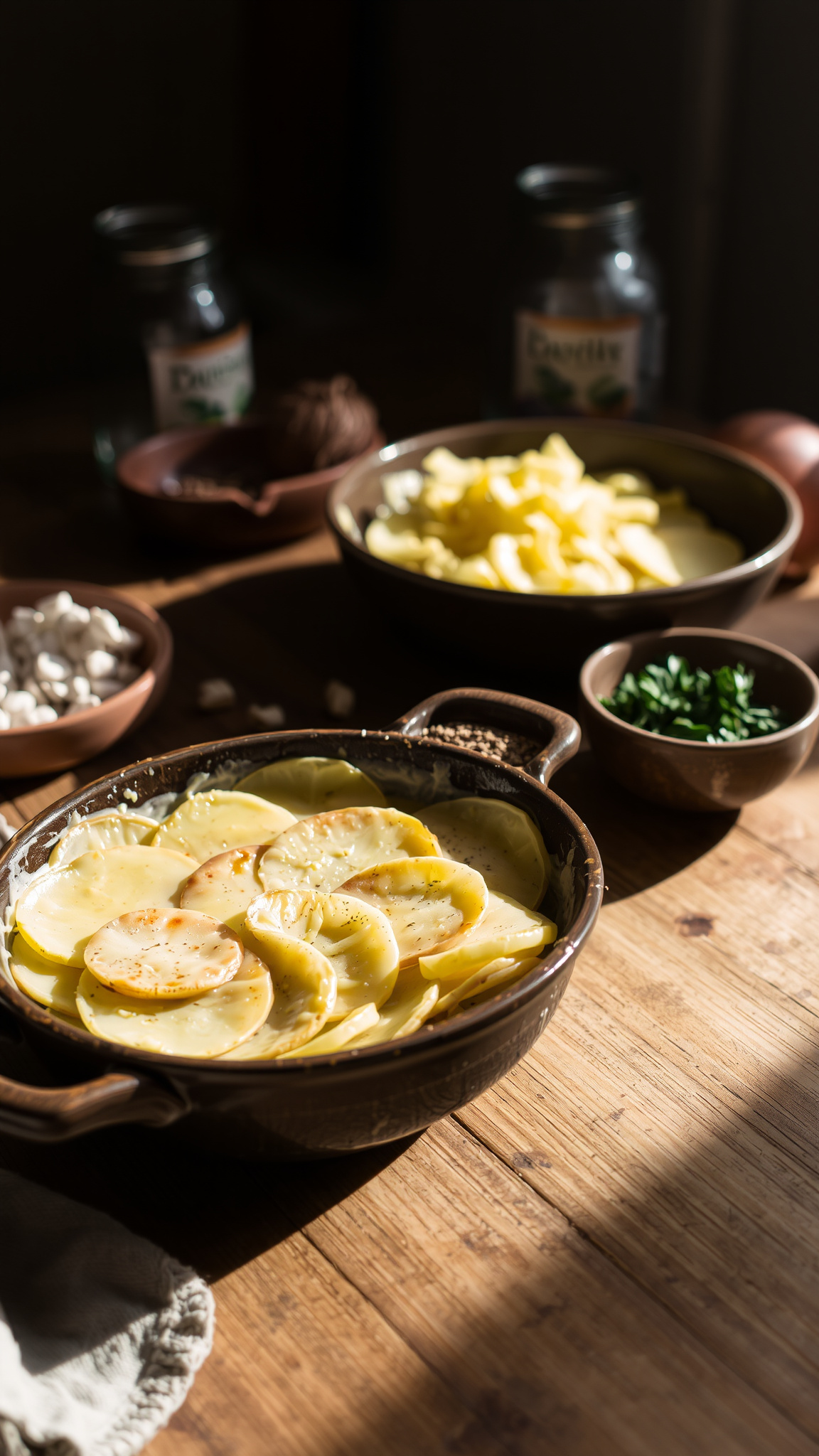
Arrange half of the sliced potatoes in the prepared baking dish. Overlap them slightly. Pour half of the thickened cream sauce over the potatoes. Repeat with the remaining potatoes and the remaining sauce.
5. Bake
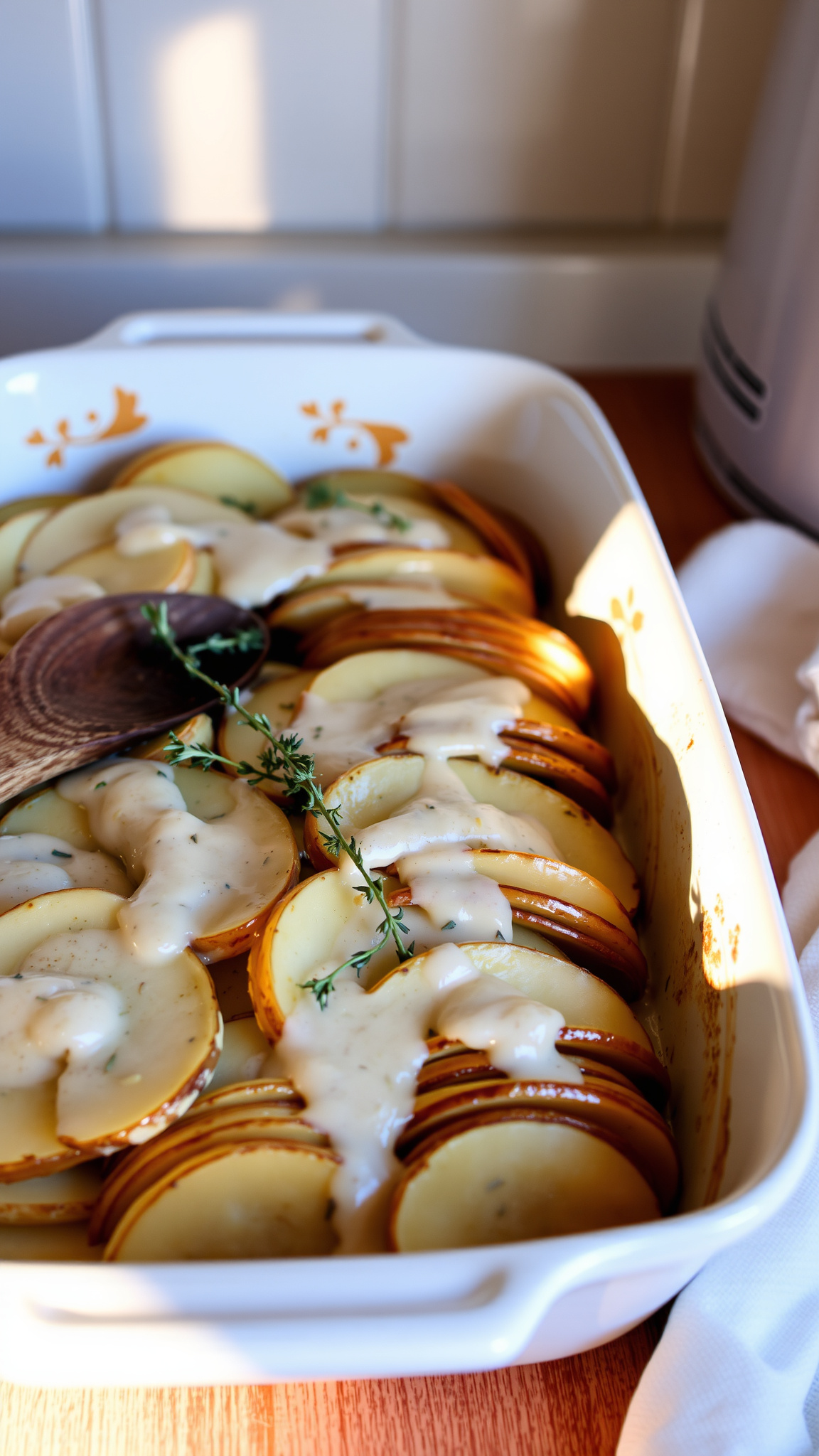
Cover the dish with foil and bake for 30 minutes. The foil helps steam the potatoes so they cook through. Remove the foil and bake for another 25-30 minutes, or until the potatoes are fork-tender and the top is golden brown and bubbling. If using cheese, sprinkle it on during the last 15 minutes of baking.
6. Rest
Let the dish rest for at least 10-15 minutes before serving. This allows the sauce to set and thicken slightly, making it much easier to serve clean slices.
Nutrition Facts
The values below are estimates based on one serving (assuming 8 servings total).
| Nutrient | Amount per Serving |
| Calories | 320 kcal |
| Carbohydrates | 38g |
| Protein | 8g |
| Fat | 16g |
| Saturated Fat | 9g |
| Fiber | 3g |
| Sugar | 5g |
| Sodium | 340mg |
Helpful Tips
- Uniform Slicing is Key: If your potato slices vary in thickness, some will turn to mush while others remain hard. Aim for 1/8 to 1/4 inch thickness.
- Prevent Curdling: High heat can sometimes cause milk to separate. By creating a roux (butter and flour) first, you stabilize the sauce, preventing it from breaking during the long bake time.
- Don’t Skip the Rest: It is tempting to dig in immediately, but the sauce is very liquid right out of the oven. Resting lets the starch absorb the liquid for that perfect creamy consistency.
Variations
- Add Ham: Dice up 1 cup of cooked ham and layer it in with the potatoes for a hearty main dish.
- Herb Infusion: Steep fresh rosemary or sage in the milk while heating it up, then remove the herbs before mixing with the flour for a sophisticated flavor profile.
- Loaded Potatoes: Top with crumbled bacon and chives right before serving.
- Gluten-Free: Substitute the all-purpose flour with a 1:1 gluten-free flour blend or cornstarch to thicken the sauce.
How to Serve
This dish is rich, so it pairs best with leaner proteins or acidic sides to cut through the creaminess.
- Holiday Roast: It is a classic companion to prime rib or glazed ham.
- Green Vegetables: Serve with roasted asparagus, green beans almondine, or a crisp vinaigrette salad to balance the heavy starch.
- Grilled Meats: Excellent with pork chops or grilled chicken breast.
Storage Instructions
Refrigerating: Store leftovers in an airtight container in the refrigerator for up to 3-4 days. The sauce will thicken significantly when cold.
Freezing: Freezing is possible but not ideal. Potatoes can sometimes become grainy and the sauce may separate upon thawing. If you must freeze, bake the dish fully, let it cool completely, and freeze for up to 1 month.
Reheating: Reheat individual portions in the microwave. For larger portions, cover with foil and reheat in the oven at 350°F until warmed through. You may need to add a splash of milk if it looks dry.
Frequently Asked Questions
Why are my scalloped potatoes still hard?
This usually happens if the potatoes were sliced too thick or the oven temperature wasn’t high enough. Covering the dish with foil for the first half of baking is crucial to steam the potatoes.
What is the difference between scalloped potatoes and au gratin?
Technically, scalloped potatoes are cooked in a cream sauce, while potatoes au gratin are cooked with plenty of cheese between the layers and breadcrumbs on top. This recipe bridges the gap but leans toward the scalloped method.
Can I make this ahead of time?
Yes. You can bake the dish partially (about 45 minutes), let it cool, and refrigerate it. The next day, bring it to room temperature and finish baking it for 20-30 minutes until hot and bubbly.
Conclusion
Mastering this Creamy Classic Scalloped Potatoes recipe gives you a reliable, delicious side dish that works for almost any occasion. It requires a bit of patience to slice and layer, but the result—tender potatoes in a rich, savory sauce—is well worth the effort.


