

Beef Bulgogi Recipe
I’ve always been a sucker for bold, savory flavors that hit all the right spots, and beef bulgogi is one dish that never fails to deliver. Growing up, I’d watch my mom whip up Korean-inspired meals, her kitchen filled with the sweet-salty aroma of soy sauce and sesame oil. It wasn’t until I tried making bulgogi myself that I truly appreciated its magic—thinly sliced beef, marinated to perfection, sizzling on a hot pan. That first bite? Pure bliss, with a caramelized edge and a tender, juicy center. It’s now my go-to for family dinners or when I want to impress friends without spending hours in the kitchen.
What makes bulgogi so special is its versatility. Whether you’re grilling it for a BBQ, tossing it in a rice bowl, or wrapping it in lettuce for a low-carb treat, it’s always a crowd-pleaser. This recipe is my tried-and-true version, packed with authentic flavors but simple enough for beginners. Stick with me, and I’ll walk you through every step to nail this Korean classic at home. Ready to fire up your stove? Let’s dive in!
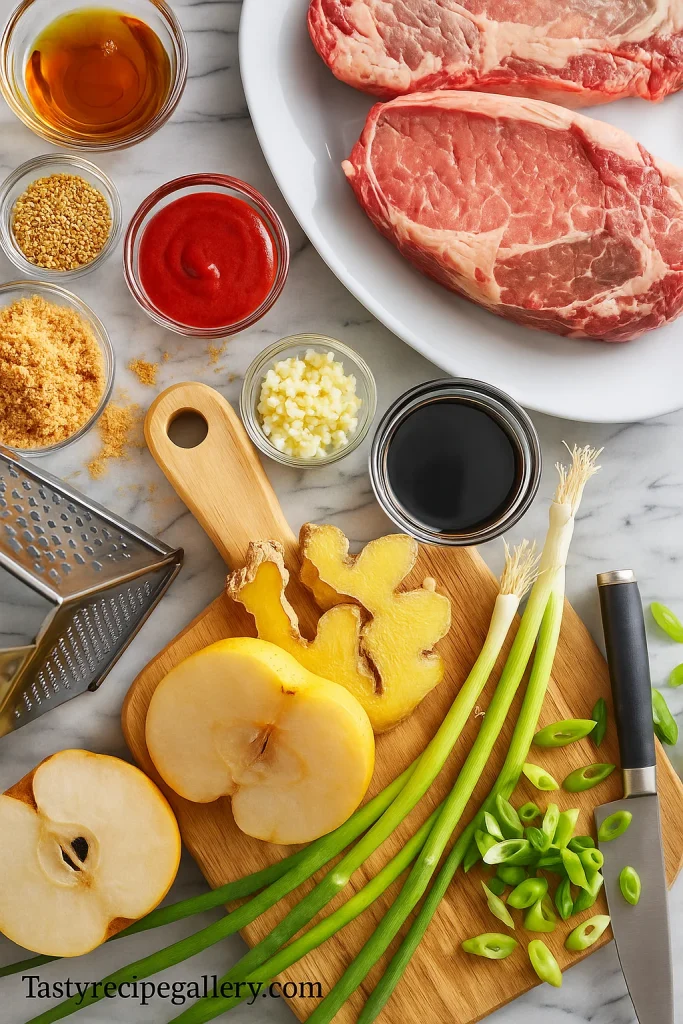
Ingredients
- 1 lb (450g) beef sirloin or ribeye, thinly sliced
- 1/4 cup soy sauce
- 2 tbsp sesame oil
- 2 tbsp brown sugar
- 1 tbsp rice wine (or mirin)
- 1 tbsp grated Asian pear (or apple)
- 3 garlic cloves, minced
- 1 tsp grated ginger
- 1/4 tsp black pepper
- 1 small onion, thinly sliced
- 2 green onions, chopped
- 1 tbsp sesame seeds
- 1/4 cup sliced mushrooms (optional)
- Neutral oil (like vegetable or canola) for cooking
Servings: 4
Prep Time: 15 minutes (plus 30 minutes marinating)
Cook Time: 10 minutes
Total Time: 55 minutes
Step-by-Step Instructions
- Prep the beef: If not pre-sliced, freeze the beef for 20 minutes to firm it up, then slice it paper-thin against the grain. This makes it tender and quick to cook.
- Make the marinade: In a large bowl, whisk together soy sauce, sesame oil, brown sugar, rice wine, grated pear, garlic, ginger, and black pepper until smooth.
- Marinate the beef: Add the beef slices, onion, and mushrooms (if using) to the marinade. Toss to coat evenly. Cover and refrigerate for at least 30 minutes, or up to 2 hours for deeper flavor.
- Heat the pan: Set a large skillet or grill pan over high heat. Add a drizzle of neutral oil and let it get smoking hot.
- Cook the beef: Add the marinated beef in a single layer, working in batches if needed. Sear for 2-3 minutes per side until caramelized and cooked through.
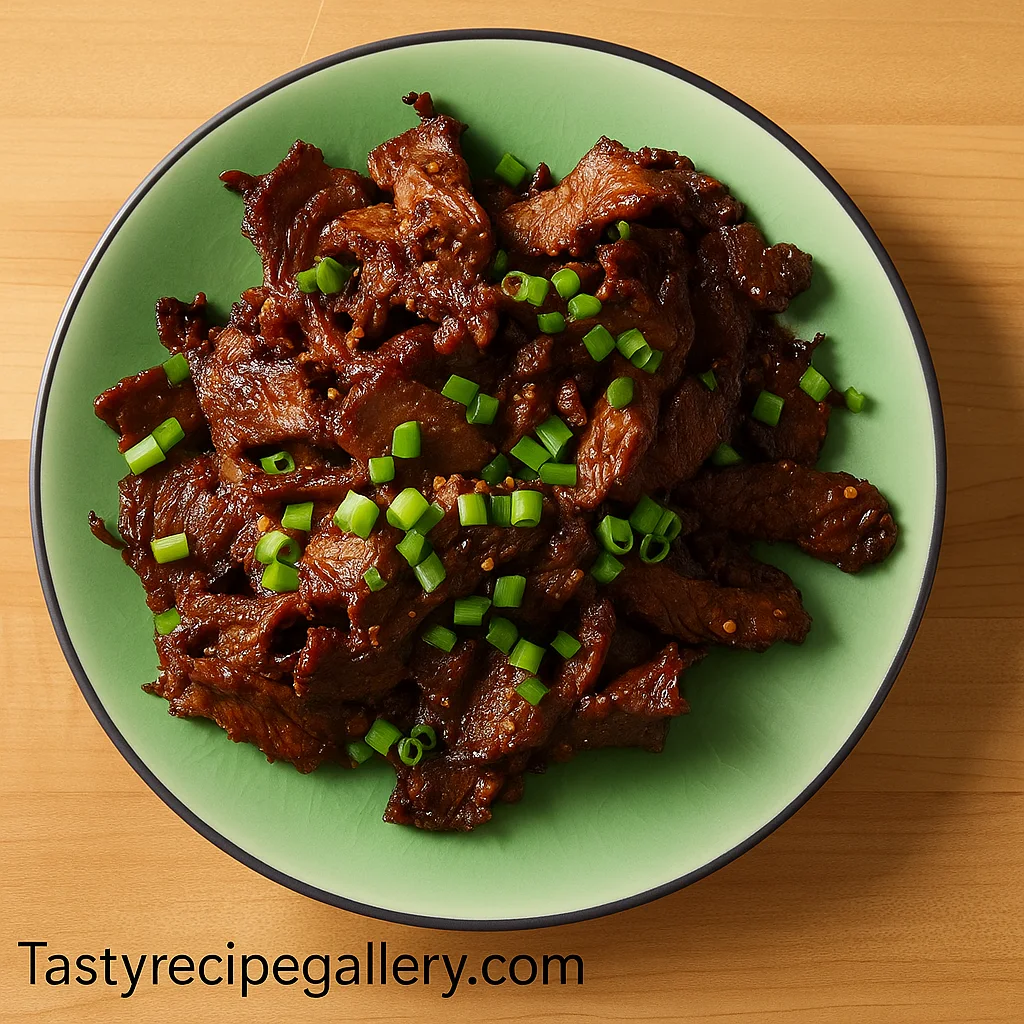
- Garnish and serve: Transfer to a plate, sprinkle with green onions and sesame seeds, and serve hot.
Pro Cooking Tips
- Slice thinly: Thin slices soak up the marinade better and cook faster. A sharp knife or a butcher’s pre-sliced beef works wonders.
- Don’t skip the pear: The fruit’s enzymes tenderize the beef naturally, giving it that melt-in-your-mouth texture.
- High heat is key: A screaming-hot pan creates that signature caramelized crust. Don’t overcrowd the pan to avoid steaming the meat.
- Marinate longer for bold flavor: Overnight marinating (up to 8 hours) makes the beef even tastier, but don’t go beyond that to avoid mushiness.
Variations
- Spicy Bulgogi: Add 1-2 tbsp gochujang (Korean red pepper paste) to the marinade for a fiery kick.
- Chicken Bulgogi: Swap beef for boneless chicken thighs, adjusting cook time to ensure it’s fully cooked.
- Veggie Bulgogi: Use firm tofu or portobello mushrooms, sliced thin, for a vegetarian twist.
- Bulgogi Tacos: Serve in warm tortillas with kimchi and a drizzle of sriracha mayo for a fusion treat.
Storage Suggestions
- Fridge: Store cooked bulgogi in an airtight container for up to 3 days. Reheat in a hot skillet to retain texture.
- Freezer: Freeze raw marinated beef in a freezer-safe bag for up to 2 months. Thaw overnight in the fridge before cooking.
- Reheating: Avoid microwaving to prevent toughness. Reheat on a skillet over medium heat for 1-2 minutes.
How to Serve
Bulgogi shines in many ways:
- Classic Style: Serve with steamed rice and banchan (Korean side dishes) like kimchi or pickled radish.
- Lettuce Wraps: Wrap in crisp lettuce leaves with a dab of ssamjang (Korean dipping sauce) for a low-carb option.
- Rice Bowls: Pile over rice with a fried egg, cucumber slices, and a sprinkle of sesame seeds.
- Stir-Fry: Toss with stir-fried veggies like bell peppers and carrots for a hearty one-pan meal.
Nutrition Facts (Per Serving)
- Calories: 320 kcal
- Protein: 25g
- Fat: 18g
- Carbohydrates: 12g
- Sugar: 8g
- Sodium: 900mg
Note: Values are approximate and may vary based on ingredients used.
FAQs
1. Can I use a different cut of beef?
Yes! Ribeye or sirloin are ideal for tenderness, but flank or skirt steak work too. Just slice thinly and marinate longer for tougher cuts.
2. Is there a substitute for Asian pear?
Apple or pineapple juice works in a pinch. They mimic the pear’s tenderizing enzymes and subtle sweetness.
3. Can I grill bulgogi instead of pan-searing?
Absolutely! Grill over medium-high heat for 2-3 minutes per side. A BBQ adds a smoky depth.
4. How do I make it less sweet?
Cut the brown sugar to 1 tbsp and add a splash of rice vinegar for balance.
5. Is bulgogi gluten-free?
Use tamari or gluten-free soy sauce to make it gluten-free. Double-check your rice wine for hidden gluten.
Conclusion
Beef bulgogi is more than just a meal—it’s a flavor-packed experience that brings people together. With its sweet-savory marinade and tender, juicy beef, it’s no wonder this Korean dish is a global favorite. Whether you’re a newbie in the kitchen or a seasoned cook, this recipe is foolproof and endlessly adaptable. So, grab your ingredients, fire up that pan, and treat yourself to a taste of Korea at home. Got leftovers? Lucky you—they’re just as delicious the next day. Happy cooking!